
Hit by a slowdown in information technology (IT) hiring, Info Edge (India)'s results for the July-September quarter (Q2) of 2025-26 (FY26) fell short of brokerage expectations. What helped the online recruitment major offset the weak IT hiring trend was broad-based growth across other sectors.

Aviation regulator DGCA intensifies scrutiny of IndiGo following widespread flight cancellations. The airline will offer travel vouchers to affected passengers.

Global index provider MSCI has announced the addition of four Indian companies-including Fortis Healthcare and Paytm - to its Global Standard indices. According to Nuvama Alternative & Quantitative Research, each of these companies is expected to see passive inflows exceeding $400 million. Shares of Paytm rose 4.3 per cent on Thursday, while Fortis Healthcare dipped 1.1 per cent.

The government's capital expenditure in the April-November period of financial year 2024-25 (FY25) continued to contract with a 12.3 per cent decline year-on-year (Y-o-Y), according to data released by the Controller General of Accounts on Tuesday.

Among the Sensex firms, Infosys, HCL Technologies, Bajaj Finance, Asian Paints, Tata Motors Passenger Vehicles, Tata Consultancy Services, Bharti Airtel, Titan, Bajaj Finserv, Reliance Industries and Larsen & Toubro were the gainers. Trent Ltd, Eternal, Power Grid, UltraTech Cement, Mahindra & Mahindra, Axis Bank, State Bank of India, Adani Ports, Hindustan Unilever and NTPC were the laggards.

Jio Platforms Limited is likely to have a valuation of $148 billion by the time it goes public on the back of strong free cash flow and potential deleveraging, ICICI Securities said.

The Pradhan Mantri Awas Yojana-Grameen has the highest unutilised amount (Rs 13,111 crore) compared to any other centrally sponsored scheme.

Fiscal deficit for 2021-22 worked out to be 6.71 per cent of the gross domestic product (GDP), lower than 6.9 per cent projected by the Finance Ministry in the revised Budget Estimates, according to government data released on Tuesday. Unveiling the revenue-expenditure data of the Union government for 2020-21, the Controller General of Accounts (CGA) said that the fiscal deficit in the absolute terms was be Rs 15,86,537 crore (provisional).

After a gap of three years, direct tax collections -- which include corporate tax and personal income tax -- have exceeded the Budget estimates for FY'22, indicating economic recovery.

India will publish its revised Nationally Determined Contribution (NDC) for the 2035 period by December, Environment Minister Bhupender Yadav said on Monday, while urging developed nations to achieve net zero targets ahead of their current timelines.

Net direct tax collection grew 13.13 per cent to over Rs 21.26 lakh crore so far this fiscal aided by by higher advance tax mop up, government data showed on Monday. During the year, the government collected Rs 10.44 lakh crore from four instalments of advance tax as against Rs 9.11 lakh crore in the previous fiscal, registering a growth of 14.62 per cent.

Steel maker JSW Steel's Q3 results, announced on January 24, 2025, after market hours, failed to meet Street expectations. The company reported a consolidated net profit attributable to the owners of Rs 717 crore in Q3FY25, reflecting a 70.3 per cent decline Y-o-Y, compared to Rs 2,415 crore in Q3FY24.

The government has revised gold import data, bringing down numbers for November by $5 billion to $9.84 billion, possibly to rectify double accounting of inbound shipments. According to revised data of the commerce ministry arm Directorate General of Commercial Intelligence and Statistics (DGCIS), gold import numbers have been slashed since April 2024, revealing excess imports of about $11.7 billion during the first eight months of 2024-25.

Fitch Ratings on Wednesday raised India's GDP growth forecast to 6.9 per cent for current fiscal year, from 6.5 per cent earlier, citing strong June quarter growth and domestic consumption-led demand.
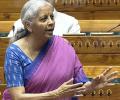
The Lok Sabha on Tuesday passed the Finance Bill 2025, along with 35 government amendments, including one that abolishes a 6 per cent digital tax on online advertisements.

India's economic growth slowed to 7.4 per cent in the March quarter, bringing down the annual growth rate to 6.5 per cent during 2024-25, according to official data released on Friday. The growth in the January-March period was lower than the 8.4 per cent expansion in the year-ago quarter.

India's industrial production growth remained steady at 4 per cent in September this year due to the good performance of the manufacturing sector, according to official data released on Tuesday. The factory output, measured in terms of the Index of Industrial Production (IIP), had expanded by 3.2 per cent in September 2024.

Finance Minister Nirmala Sitharaman on Saturday presented Union Budget 2025-26, envisaging an expenditure of Rs 50,65,345 crore, an increase of 7.4 per cent over the current fiscal.

'The finance minister missed yet another opportunity to simplify the income tax structure in the Budget.' 'This was an opportune moment to get rid of the old tax system entirely and move fully to the new system,' asserts M Govinda Rao, member of the 14th Finance Commission.

UBS has turned bullish on emerging markets (EM), including India, as it finds benign macro trends, positive momentum in earnings revisions, and resilient EM currencies helping these economies sustain higher valuations and attracting flows. Among regions, it has upgraded Mainland China to 'attractive' and China Tech to 'most attractive', while downgrading Philippines to 'neutral'.

India's economic growth rate decelerated to 6.2 per cent in the October-December quarter this fiscal, mainly due to poor performance by mining, manufacturing and all other sectors, with the exception of agriculture. However, on a sequential basis, the economic growth rate in the third quarter showed improvement over 5.6 per cent recorded in the second quarter.

While Q2FY26 is expected to be mildly disappointing for the hospital sector, there's a lot of investor optimism for the future. This comes after a favourable revision in rates for Central Government Health Scheme (CGHS) procedures, as well as expectations of rising occupancy and growth in average revenue per operating bed (ARPOB).

The CSO said that the first revised estimates for 2016-17 have been compiled using industry-wise/institution-wise detailed information instead of using the benchmark-indicator method employed at the time of release of Provisional Estimates on May 31, 2017.

The size of Budget 2024-25 has increased 6.1 per cent to Rs 47.66 lakh crore because of the rise in expenditure and higher allocation for capital expenditure and social sector schemes.

The Reserve Bank on Wednesday revised upward its growth estimates for the current fiscal year to 6.8 per cent and lowered its inflation projection to 2.6 per cent based on an above-normal monsoon and the rationalisation of GST rates.

The Indian steel industry is faced with a paradox: Rising demand and falling prices. Demand continues to surge as user industries gather pace, with the World Steel Association projecting around 9 per cent annual growth for India over 2025 and 2026, the year domestic demand is projected to be almost 75 million tonnes (mt) higher than in 2020.

Banking on increased freight haul and earnings from upper class travellers, Indian Railways has projected a gross earning of Rs 43,445 crore (Rs 434.45 billion) in 2003-04.

The Department of Social Justice and Empowerment has received Rs 13,611 crore in the Union Budget announced on Saturday, while the allocation for disability welfare now stands at Rs 1,275 crore.

The stock of mid-tier information technology (IT) major Persistent Systems has been one of the outperformers in the IT pack with a return of 5.3 per cent over the last year, while its peer index, the Nifty IT, is down 16.2 per cent over the same period. The strong September quarter (Q2FY26) result and upgrades by brokerages are positive but its ability to sustain growth momentum in a weak macroeconomic environment will be key for future gains. At the current levels, the stock is trading at a premium valuation of 38 times its FY27 earnings estimates.
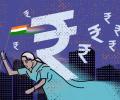
The government's indirect tax collection is expected to increase by 8.3 pc in the financial year 2025-26 (FY26), according to a report by ICICI Bank. The report also noted that this growth is higher than the 7.1 per cent increase seen in FY25 and is mainly driven by rise in GST revenue from strong urban consumption. It said "The increase is driven by higher goods and services tax collections which in-turn is explained by boost to urban consumption".

Indian consumers are entering the festive season with renewed confidence and financial optimism, outpacing global benchmarks, according to Deloitte India's latest Consumer Signals: India Chapter. "With inflationary pressures easing and the recent Goods and Services Tax (GST) revisions enhancing purchasing power and festive cheer among consumers, this brings a new wave of consumption.

As lower GST rates take effect on Monday, sales of air-conditioners, TV sets surged dramatically with buyers rushing to grab cheaper deals offered by retailers at the beginning of the Navratra festival.

Though the Centre's fiscal consolidation story is taking a hit, Plan expenditure is likely to provide some respite. In the Budget, expected to be tabled by mid-March, the Plan expenditure is likely to be scaled down in the revised estimates for 2011-12, compared to Budget estimates.

Moody's Ratings on Monday downgraded Tata Motors' outlook to negative from positive following a cyber attack on its British arm Jaguar Land Rover which has led to a complete production halt. The rating agency affirmed the Mumbai-based auto major's Ba1 corporate family rating (CFR).

India's merchandise trade deficit widened to a record $41.68 billion in October, as gold imports trebled and outbound shipments registered their sharpest contraction in 14 months, according to data released by the commerce department.
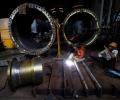
The country's industrial production grew at 4 per cent in August, mainly due to better performance by the mining sector, according to government data released on Monday.

Mahindra & Mahindra on Tuesday posted a 28 per cent year-on-year increase in its consolidated profit after tax to Rs 3,673 crore for the second quarter ended September 30, 2025, driven by robust performance of the farm sector, while also seeing the impact of the GST transition on the auto sector. The company reported a profit after tax (PAT) of Rs 2,867 crore for the July-September period of the last fiscal.

Earlier, the CSO in its advance estimate had pegged the GDP growth rate for 2018-19 at 7.2 per cent.

Domestic rating agency Icra on Monday revised its FY24 GDP growth forecast to 6.5 per cent from 6.2 per cent earlier. However, the revised forecast is still much lower than the Reserve Bank of India's (RBI's) 7 per cent real Gross Domestic Product (GDP) growth estimate for the ongoing fiscal. Earlier this month, the RBI had revised upwards its GDP estimate to 7 per cent from 6.5 per cent, calling the revised number a "conservative" one.

Questions will be raised over why those changes take place and whether non-economic factors are at play, says A K Bhattacharya.
